
Opening Reciply
Your kitchen is almost ready.
Opening Reciply
Your kitchen is almost ready.
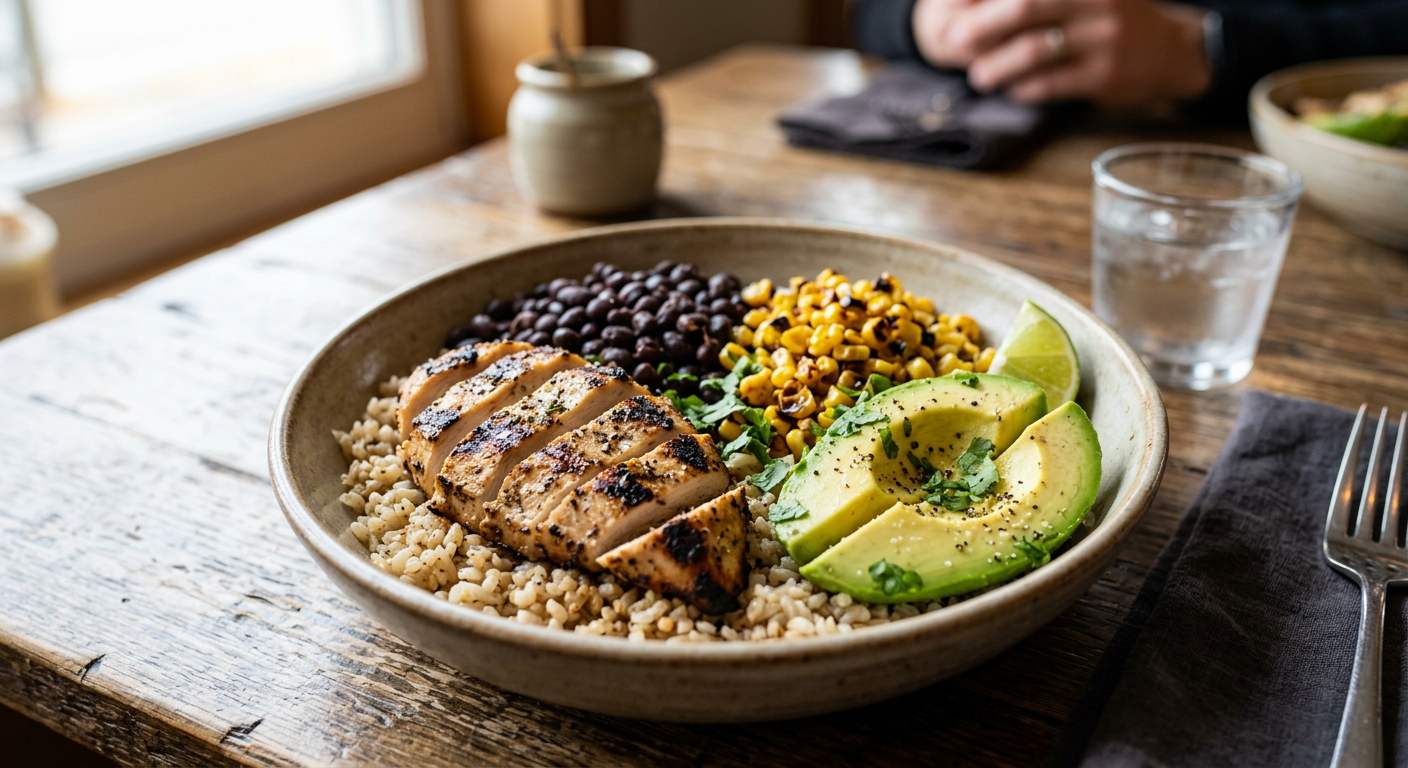
We built Reciply because of a very specific, very ordinary frustration: opening the fridge on a Wednesday, seeing half a bag of spinach, three quarters of a rotisserie chicken and an open jar of olives, and having no idea what that adds up to. Everyone can cook from a recipe with a shopping list. Almost nobody has a system for cooking from what is already there. Over the last two years the people on our team have been running the same experiment on our own kitchens, and the habits below are the ones that actually survived.
They are not clever. They are repeatable, which matters more. 1. Keep one standing formula instead of one standing recipe A recipe fails the moment an ingredient is missing. A formula does not. The formula we use most is protein + starch + something green + fat + acid . Chicken, rice, wilted spinach, olive oil, lemon. Beans, tortillas, cabbage, sour cream, lime. Eggs, potatoes, whatever herb is going limp, butter, vinegar.
Once you are thinking in slots rather than ingredients, the leftover half-bag of spinach stops being an orphan and becomes the “something green” slot for tonight. When we tried this on ourselves the biggest change was not the food, it was the decision time: five seconds instead of fifteen minutes of scrolling. If you want a starting point, our leftover vegetables page lists combinations that reliably work. 2.
Run a rescue tray once a week Pick one day. Ours is Sunday afternoon, but the day matters far less than the fact that it repeats. Pull out everything that will not survive another week, put it on a sheet pan, toss it with oil and salt, and roast at 425°F (220°C) until the edges brown. Roasted vegetables keep three to four days refrigerated and they are the most useful thing you can have in a container.
They become a grain bowl, a frittata filling, a soup base, a taco filling or a pasta sauce with almost no additional work. The USDA guidance on leftovers is the rule we follow: cool quickly, refrigerate within two hours, eat within three to four days. Vegetables that roast well together: anything root, anything cruciferous, peppers, onions and mushrooms. Add soft vegetables like zucchini and tomatoes halfway through, not at the start, or they collapse. 3.
Build a sauce shelf, not a spice rack This is the habit that changed the most for us. Leftovers get boring because they taste the same on day three as they did on day one. A shelf of four or five strong-flavored condiments means the same roasted vegetables can be Mediterranean on Monday and something close to Sichuan on Wednesday. Something acidic — lemon, red wine vinegar, rice vinegar, pickle brine.
Something salty and savory — soy sauce, fish sauce, miso, anchovy paste, a parmesan rind. Something spicy — chili crisp, harissa, gochujang, hot sauce. Something creamy — yogurt, tahini, mayonnaise, sour cream. Mix any two with a bit of water and you have a dressing. Tahini plus lemon plus water is one; yogurt plus harissa is another; soy plus rice vinegar plus a spoon of chili crisp is a third.
Nothing in that list needs restocking more than once a season. 4. Keep a scrap bag in the freezer Onion ends, carrot tops, celery leaves, herb stems, parmesan rinds, the chicken carcass. One gallon freezer bag, filled over two or three weeks, then simmered 45 minutes with water and a bay leaf. That is stock, and stock is what turns “some vegetables and rice” into soup that tastes like it took effort.
Two things we learned the hard way: skip brassica scraps (broccoli stems, cabbage cores) because they turn the stock sulfurous, and do not salt the stock while it reduces — salt it in the dish you eventually use it in. 5. Leave one dinner slot empty every week If you plan seven dinners you will cook five and waste the ingredients for two. We plan four or five and leave the rest deliberately blank.
The blank slots get eaten by leftovers, by the roasted vegetables from the rescue tray, or by whatever is closest to its date. This is also the slot where an ingredient-first tool earns its keep. Type in the three or four things you need to use and let it propose the dish rather than starting from a recipe and shopping backwards. That is exactly what SmartCook does, and if you would rather not type, Fridge Scan reads a photo of the shelf and returns five ideas built from what it can see.
What to do with the most common leftovers Half a rotisserie chicken — shred it cold, then use it in fried rice, a quesadilla or a brothy soup. Do not re-roast it; it dries out. See our rotisserie chicken ideas . Wilting greens — fine cooked even when they look sad raw. Wilt into eggs, pasta or rice at the very end. Cooked rice, day two or three — the single best ingredient for fried rice.
Fresh rice steams; cold rice fries. Milk or cream near date — pancakes, cornbread or a pan sauce, where a little acidity helps. Stale bread — croutons, breadcrumbs, panzanella or a savory bread pudding. One of the few things that gets more useful as it ages. Herb stems — blend them into sauce. Cilantro and parsley stems carry more flavor than the leaves. An honest note on savings We are not going to invent a statistic about how much money this saves, because we have not measured it in a way we would trust.
What we can say from our own kitchens is that the rescue tray and the empty dinner slot are the two habits that cut visible waste immediately, and both are free to try this week. What does Reciply cost? Reciply is free to use . Every account starts with 3 free recipes — no credit card needed — including Quick Cook, SmartCook, Fridge Scan, recipe photos, nutrition and A–F health grades.
Saving, sharing and browsing community recipes stay free. If you cook often, Reciply Plus is an optional subscription for $1.99/week or $19.99/year . Both plans include 20 new recipes every week plus every kitchen tool. You can cancel any time. See Reciply pricing for details. Use it on the web at reciply.us or download the free iOS app: Reciply — Recipe Generator on the App Store . Note: Reciply is an AI recipe generator that writes original recipes from the ingredients you have.
It is not a recipe-saving, bookmarking, or cookbook-importing app, and it is not related to any similarly named recipe-organizing app. Kitchen tools you can use in Reciply All of these are live in the app today. SmartCook — type in what is already in your fridge and get a recipe built around it. Free. Recipe Generator — pick meal type, cook time, difficulty and dietary goal. Free. Fridge Scan — photograph your fridge and get five meal ideas from what it sees.
Free. Recipe Gallery — browse, rate and comment on community recipes. Free. Recipe Remix — change one thing about a recipe and regenerate it, image included. Plus. Cook Mode — step-by-step cooking with built-in timers and a screen that stays awake. Plus. Meal Planner — build a multi-day plan around your calorie and dietary targets. Plus. Shopping Lists — turn any recipe or meal plan into a checkable list with duplicates merged.
Plus. Diet Coach — log calories and macros and get told what to cook next. Plus. Offline Recipes — download your cookbook so it works with no connection. Plus. Sources USDA FoodData Central — reference nutrient data used to sanity-check the calories and macros shown on Reciply recipes. FoodSafety.gov — Safe Minimum Internal Temperatures — the cooking temperatures referenced for meat, poultry, fish and eggs.
Dietary Guidelines for Americans — the general nutrition guidance behind our A–F health grading. USDA FSIS — Leftovers and Food Safety — storage and reheating guidance for leftovers. Nutrition figures and health grades on Reciply are estimates cross-checked against public databases, not lab measurements, and are not medical advice. See how Reciply works .
Home · Blog · What is Reciply
Try Reciply free and generate recipes from your ingredients. It is an AI recipe generator that writes original recipes from your ingredients — not a recipe-saving or cookbook-importing app. Free iOS app: Reciply on the App Store.