Opening Reciply
Your kitchen is almost ready.
Opening Reciply
Your kitchen is almost ready.
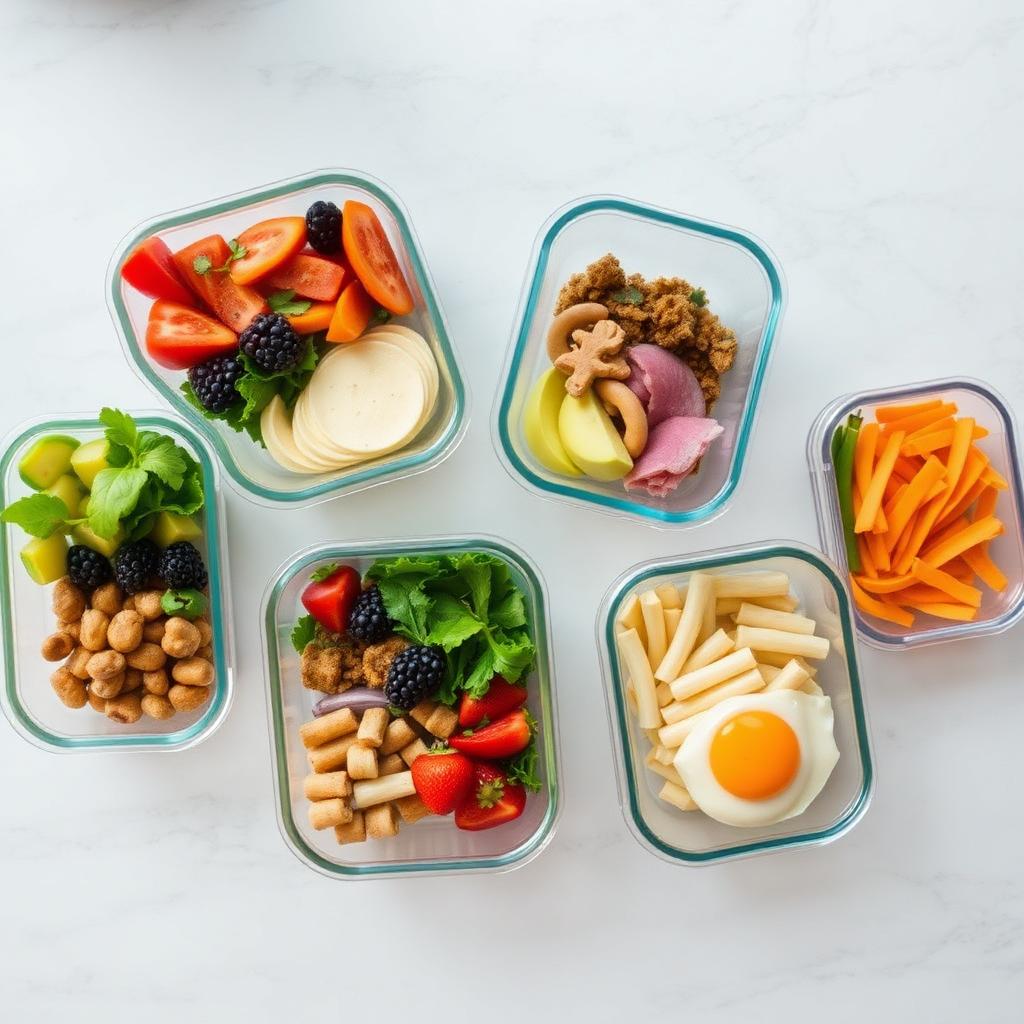
Why Most Meal Plans Fail in Week Two The typical first attempt at meal planning looks like this: a colour-coded spreadsheet, 21 different meals, a shopping list with 60 items, and a quiet collapse by Wednesday. It fails for predictable reasons — it is too ambitious, it ignores real life, and it treats every meal as a separate project. A system that survives contact with a normal week is boring, repetitive and flexible.
Here is one that takes about 20 minutes on a Sunday. The Core Idea: Plan Dinners Only Breakfast and lunch are habit meals. Most people happily eat the same two or three things on rotation and do not need planning — they need stocking. Buy the ingredients for two breakfasts and two lunches and repeat them all week. Spend your planning energy on dinner, which is the meal that actually derails and turns into a takeaway order.
Step 1: Count the Real Nights Open your calendar first, not a recipe site. A normal week has fewer cooking nights than you think: One or two nights you are out, working late, or eating with other people. One night you will be too tired to cook regardless of what the plan says. One night of intentional leftovers. That leaves three or four nights that need an actual plan. Planning seven is the single most common beginner mistake.
Step 2: Use a Weekly Theme Skeleton Themes remove decision fatigue without forcing repetition of the same dish: Monday: Meatless (pasta, lentils, curry, stir-fry) Tuesday: Something in a tortilla (tacos, fajitas, wraps) Wednesday: One-pan or traybake Thursday: Fridge clear-out — whatever is left, no shopping Friday: Fun food (pizza, burgers, takeaway) Weekend: One longer cook, one easy night You still choose the specific dish, but the category is decided, and that is where most of the friction lives.
Step 3: Shop Your Kitchen Before the Shop Spend five minutes listing what is already in the fridge, freezer and pantry — particularly anything approaching its date. Build at least one, ideally two, of your planned dinners entirely around those items. This is where meal planning saves real money: the average household throws away a meaningful share of the food it buys, almost all of it because nobody built a plan around it.
Step 4: Write the List by Section, Not by Recipe Group the shopping list into produce, protein, dairy, frozen, pantry. One pass through the shop, no doubling back, far less impulse buying. If you shop online, keep a saved basket of your fixed staples and only edit the variable items each week. Step 5: Do the 45-Minute Prep Block Not full meal prep — component prep. On Sunday: Cook a grain (rice, quinoa, pasta) — enough for two meals.
Roast a tray of vegetables. Cook one protein (chicken thighs, a pot of lentils, hard-boiled eggs). Wash and dry salad leaves and herbs. Make one sauce or dressing — a good sauce turns components into a meal. With those five things in the fridge, most weeknight dinners become assembly rather than cooking. Step 6: Build In the Escape Hatch Every plan needs two emergency dinners that require zero fresh ingredients and under 15 minutes: pasta with tinned tomatoes and garlic; eggs on toast with beans; a freezer stir-fry pack with rice.
Having these on hand is what stops a bad day from becoming a delivery order. Portion and Budget Guidance Per adult, per dinner: roughly 150g protein, 75–100g dry grains or 200g potatoes, and two handfuls of vegetables. Cook 1.5x on nights you are already cooking a batch dish — the marginal effort is near zero and you get a free lunch. Anchor two dinners a week on cheap proteins (eggs, lentils, tinned fish, chicken thighs) and the weekly cost drops noticeably.
Troubleshooting "I get bored." Keep the skeleton, change the seasoning profile. The same chicken and rice becomes Mexican, Italian or Korean with three different spice combinations. "Plans never survive." Stop assigning dishes to specific days. Plan four dishes for the week and pick whichever suits the evening. "I still waste food." Move Thursday's clear-out night earlier and be stricter about building around what you already own. "Prep day feels like a chore." Cut it to three components and put music or a podcast on.
Twenty-five minutes is enough. Make the Planning Part Take Two Minutes The slowest part of this system is deciding what those three or four dinners should be. Enter what you already have plus your household size and dietary needs into Reciply and it will generate complete recipes with nutrition and health grades, so the plan writes itself around the food already in your kitchen. What does Reciply cost? Reciply is free to use .
Every account starts with 3 free recipes — no credit card needed — including Quick Cook, SmartCook, Fridge Scan, recipe photos, nutrition and A–F health grades. Saving, sharing and browsing community recipes stay free. If you cook often, Reciply Plus is an optional subscription for $1.99/week or $19.99/year . Both plans include 20 new recipes every week plus every kitchen tool. You can cancel any time.
See Reciply pricing for details. Use it on the web at reciply.us or download the free iOS app: Reciply — Recipe Generator on the App Store . Note: Reciply is an AI recipe generator that writes original recipes from the ingredients you have. It is not a recipe-saving, bookmarking, or cookbook-importing app, and it is not related to any similarly named recipe-organizing app. Kitchen tools you can use in Reciply All of these are live in the app today.
SmartCook — type in what is already in your fridge and get a recipe built around it. Free. Recipe Generator — pick meal type, cook time, difficulty and dietary goal. Free. Fridge Scan — photograph your fridge and get five meal ideas from what it sees. Free. Recipe Gallery — browse, rate and comment on community recipes. Free. Recipe Remix — change one thing about a recipe and regenerate it, image included.
Plus. Cook Mode — step-by-step cooking with built-in timers and a screen that stays awake. Plus. Meal Planner — build a multi-day plan around your calorie and dietary targets. Plus. Shopping Lists — turn any recipe or meal plan into a checkable list with duplicates merged. Plus. Diet Coach — log calories and macros and get told what to cook next. Plus. Offline Recipes — download your cookbook so it works with no connection.
Plus. Sources USDA FoodData Central — reference nutrient data used to sanity-check the calories and macros shown on Reciply recipes. FoodSafety.gov — Safe Minimum Internal Temperatures — the cooking temperatures referenced for meat, poultry, fish and eggs. Dietary Guidelines for Americans — the general nutrition guidance behind our A–F health grading. USDA FSIS — Leftovers and Food Safety — storage and reheating guidance for leftovers.
Nutrition figures and health grades on Reciply are estimates cross-checked against public databases, not lab measurements, and are not medical advice. See how Reciply works .
Home · Blog · What is Reciply
Try Reciply free and generate recipes from your ingredients. It is an AI recipe generator that writes original recipes from your ingredients — not a recipe-saving or cookbook-importing app. Free iOS app: Reciply on the App Store.