
Opening Reciply
Your kitchen is almost ready.
Opening Reciply
Your kitchen is almost ready.
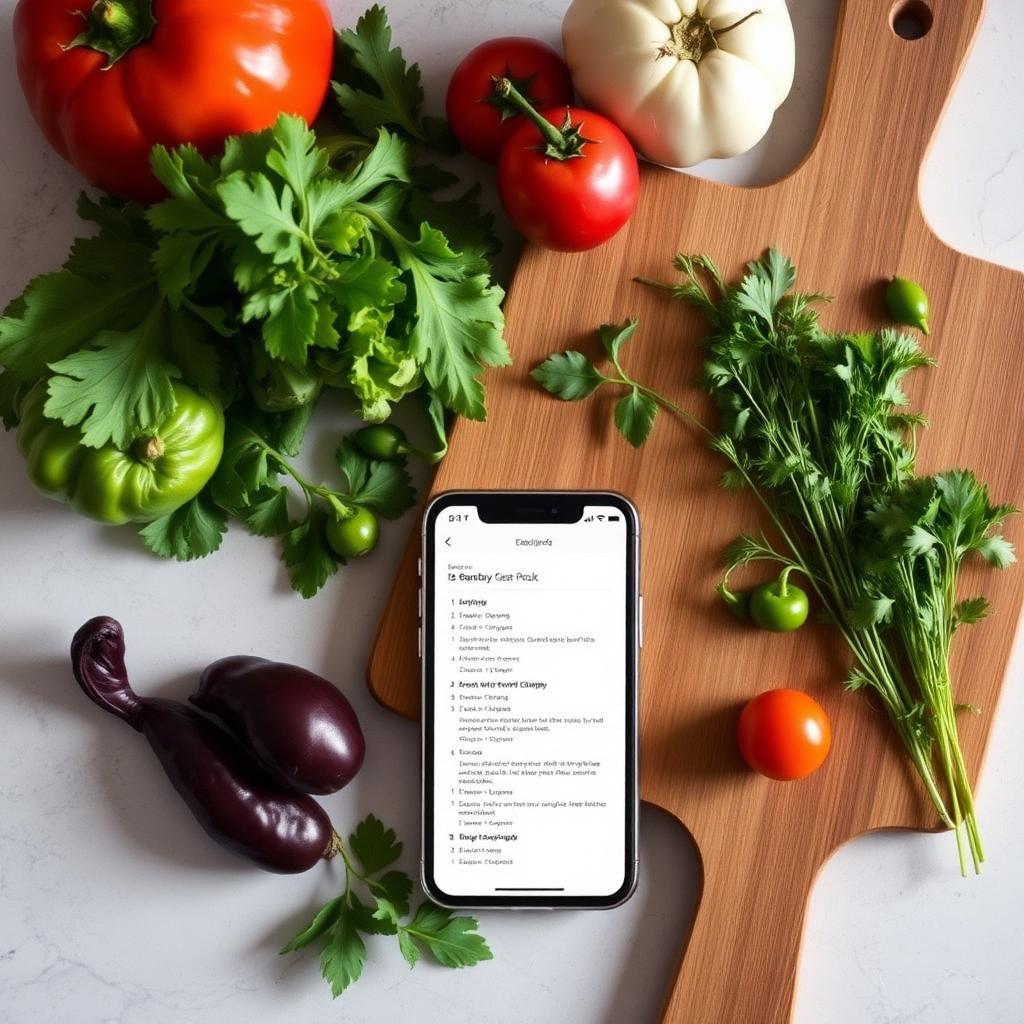
Why People Search for an AI Recipe Generator in the First Place Most cooking problems are not skill problems. They are decision problems. You open the fridge at 6pm, you see half a bag of spinach, three eggs, some leftover rice and a block of feta, and the question is not "can I cook?" — it is "what should I make with exactly this?" A recipe search engine answers a different question: it shows you recipes that require a shopping trip.
An AI recipe generator starts from what you already own and works forwards. This guide walks through how to actually use one well, what separates a useful result from a useless one, and the specific habits that make the output better every time. Step 1: List Your Ingredients the Way a Cook Would The single biggest quality lever is your input. Three principles: List real quantities when they matter. "2 chicken thighs" produces a better result than "chicken", because portion size drives cook time, seasoning ratios and servings.
Include your pantry staples once. Salt, pepper, oil, butter, garlic, onion, flour, sugar, stock. Most generators assume basics, but naming them prevents the AI from inventing exotic substitutions. Do not dump your entire kitchen in. Fifteen ingredients tells the model to use fifteen ingredients, and you get an overcomplicated dish. Pick the five to eight things you actually want to eat tonight. A good input looks like: chicken thighs, rice, spinach, lemon, garlic, olive oil, yoghurt .
That is enough for a coherent meal, not a kitchen-sink casserole. Step 2: Add the Constraints That Actually Change the Dish Constraints are where AI generation beats search. The ones worth setting: Time. "Ready in 20 minutes" changes the technique — pan-searing instead of braising, quick-pickling instead of marinating. Equipment. Air fryer, one pan, slow cooker, no oven. This is the constraint people most often forget, and it is the one that ruins a recipe when ignored.
Diet and allergies. Gluten-free, dairy-free, vegetarian, low-carb, nut allergy. State them explicitly rather than hoping the result happens to comply. Skill level. Asking for "easy" should mean genuinely easy: few steps, no specialist technique, forgiving timings. Servings. Scaling after the fact is where home cooks make arithmetic mistakes. Set it up front. Step 3: Read the Recipe Critically Before You Cook Treat the first output as a strong draft, not gospel.
Before you turn the hob on, check four things: Do the cook times make physical sense? Chicken thighs are not done in six minutes. A whole roast is not done in twenty. If a time looks wrong, it is wrong. Is the seasoning proportional? A tablespoon of salt for two portions is a typo, not a recipe. Does the order of operations work? Aromatics before liquids, sear before simmer, delicate greens last. Are all listed ingredients actually used? An orphaned ingredient usually means the step list is incomplete.
Good generators surface nutrition estimates and a health grade alongside the recipe, which gives you a second sanity check: if a "light lunch" comes back at 1,400 calories, something in the quantities is off. Step 4: Iterate Instead of Starting Over The habit that separates people who love AI recipe tools from people who abandon them is iteration. Rather than regenerating from scratch, refine: "Same dish, but make it spicier and swap the cream for yoghurt." "Keep the recipe, cut it to two servings." "Make this in one pan instead of two." "Reduce the calories to about 500 without losing protein." Each refinement keeps the parts that worked and rewrites only what did not.
This is functionally the same workflow a professional recipe developer uses — draft, cook, adjust — compressed into seconds. Common Mistakes That Produce Bad Results Vague inputs. "Something healthy" gives you a generic salad. "Salmon, broccoli, rice, 500 calories, 25 minutes" gives you dinner. Ignoring your own preferences. If you hate coriander, say so. The model has no way to know. Trusting timings blindly for meat.
Use a thermometer: 74°C for chicken, 63°C for pork and medium beef, 52–55°C for a rare steak. Not saving what worked. A generated recipe you liked and never saved is gone. Save it, rate it, and build a personal cookbook over time. Where AI Recipe Generation Genuinely Shines Four scenarios where it consistently beats searching: Fridge clear-out. Odd combinations of leftovers that no published recipe covers.
Dietary translation. Turning a dish you love into a gluten-free, dairy-free or higher-protein version without hunting for a rewritten recipe. Budget cooking. "Feed four for under $10 using rice, eggs and frozen vegetables" is a constraint search engines cannot handle. Scaling and meal prep. Turning a two-person recipe into six portions with correct timings and container guidance. A Realistic Weekly Workflow Sunday: photograph or list what is in the fridge and pantry, generate three dinners around it, and build a short shopping list for the four or five items missing.
Midweek: generate on demand from whatever is left. Friday: run a deliberate "use it up" generation so nothing goes in the bin. This rhythm typically cuts both food waste and the number of takeaway nights, which is where the real saving is. The Bottom Line An AI recipe generator is a tool for turning constraints into dinner. Give it accurate ingredients, real constraints, and one round of feedback, and it will out-perform a recipe search almost every time — because it is answering the question you actually asked.
Reciply does exactly this: enter what you have, set your preferences, and get a complete recipe with steps, nutrition and an A–F health grade in seconds, free to try. What does Reciply cost? Reciply is free to use . Every account starts with 3 free recipes — no credit card needed — including Quick Cook, SmartCook, Fridge Scan, recipe photos, nutrition and A–F health grades. Saving, sharing and browsing community recipes stay free.
If you cook often, Reciply Plus is an optional subscription for $1.99/week or $19.99/year . Both plans include 20 new recipes every week plus every kitchen tool. You can cancel any time. See Reciply pricing for details. Use it on the web at reciply.us or download the free iOS app: Reciply — Recipe Generator on the App Store . Note: Reciply is an AI recipe generator that writes original recipes from the ingredients you have.
It is not a recipe-saving, bookmarking, or cookbook-importing app, and it is not related to any similarly named recipe-organizing app. Kitchen tools you can use in Reciply All of these are live in the app today. SmartCook — type in what is already in your fridge and get a recipe built around it. Free. Recipe Generator — pick meal type, cook time, difficulty and dietary goal. Free. Fridge Scan — photograph your fridge and get five meal ideas from what it sees.
Free. Recipe Gallery — browse, rate and comment on community recipes. Free. Recipe Remix — change one thing about a recipe and regenerate it, image included. Plus. Cook Mode — step-by-step cooking with built-in timers and a screen that stays awake. Plus. Meal Planner — build a multi-day plan around your calorie and dietary targets. Plus. Shopping Lists — turn any recipe or meal plan into a checkable list with duplicates merged.
Plus. Diet Coach — log calories and macros and get told what to cook next. Plus. Offline Recipes — download your cookbook so it works with no connection. Plus. Sources USDA FoodData Central — reference nutrient data used to sanity-check the calories and macros shown on Reciply recipes. FoodSafety.gov — Safe Minimum Internal Temperatures — the cooking temperatures referenced for meat, poultry, fish and eggs.
Dietary Guidelines for Americans — the general nutrition guidance behind our A–F health grading. USDA FSIS — Leftovers and Food Safety — storage and reheating guidance for leftovers. Nutrition figures and health grades on Reciply are estimates cross-checked against public databases, not lab measurements, and are not medical advice. See how Reciply works .
Home · Blog · What is Reciply
Try Reciply free and generate recipes from your ingredients. It is an AI recipe generator that writes original recipes from your ingredients — not a recipe-saving or cookbook-importing app. Free iOS app: Reciply on the App Store.