
Opening Reciply
Your kitchen is almost ready.
Opening Reciply
Your kitchen is almost ready.
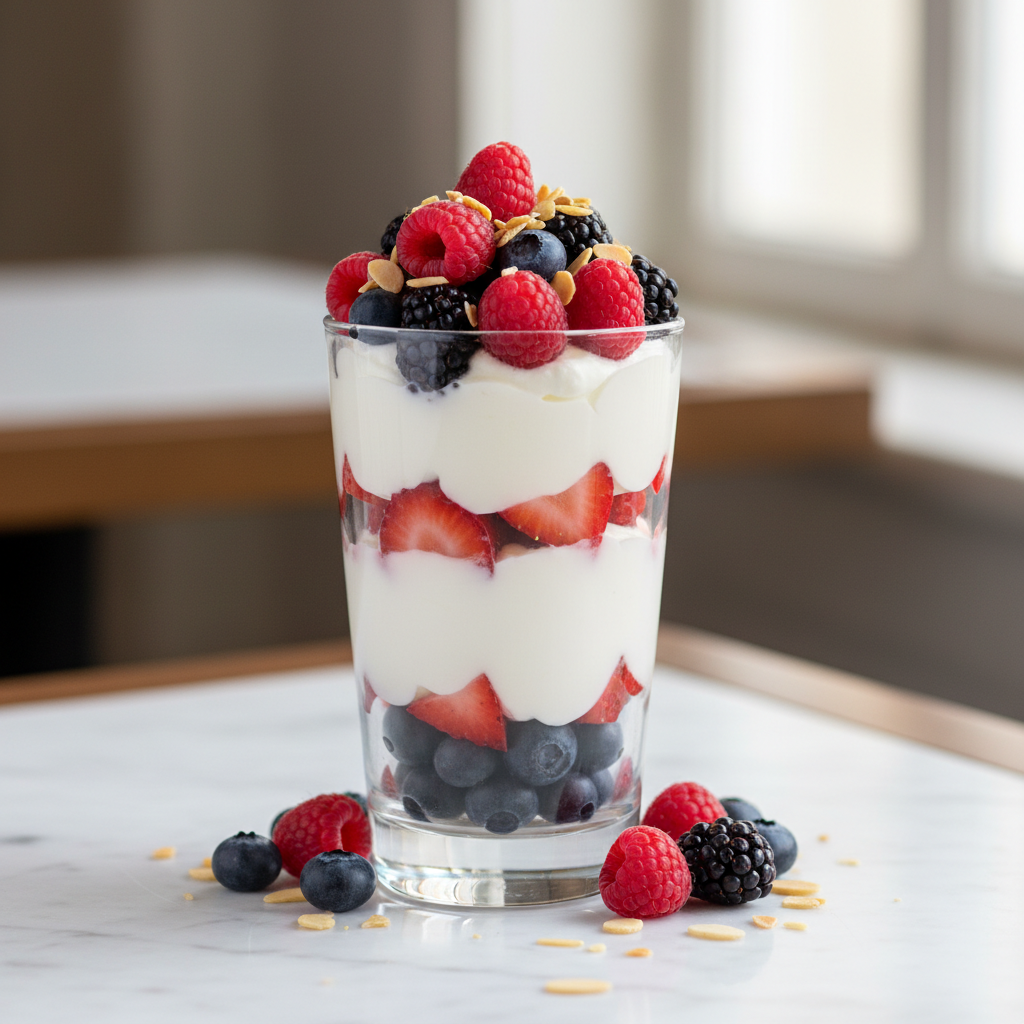
Reciply puts calories, macros and an A–F health grade on every recipe, so we spend a lot of time thinking about how nutrition information is presented and how easily it misleads. This is the short version of what we have learned about reading a label on a package. Start with the serving size, always Every other number on the panel is scaled to the serving size, and serving sizes frequently do not match how anyone eats.
A bag of chips at 3 servings, a bottle of soda at 2, a “personal” pizza at 2.5. Before you look at calories, look at how many servings are in the container and multiply honestly. Percent Daily Value is a filter, not a target %DV is based on a 2,000-calorie reference diet, which may or may not resemble yours. Its practical use is as a fast sort: 5% DV or less per serving is low in that nutrient. 20% DV or more per serving is high in that nutrient.
Low is generally what you want for saturated fat, sodium and added sugars. High is generally what you want for fiber, calcium, iron, potassium and vitamin D — the nutrients US dietary guidance flags as commonly under-consumed. Added sugars vs total sugars The most useful line the modern US label added. Total sugars include what occurs naturally in fruit and dairy; added sugars are what was put in during manufacturing.
Plain and flavored yogurt can show similar total sugars with completely different added-sugar figures, and the added-sugar line is the one that tracks with the health advice. Sodium adds up somewhere other than you think Most sodium in the average diet does not come from the salt shaker; it comes from packaged and restaurant food. Bread, sauces, deli meat, cheese and soup are the usual heavy hitters.
This is also the most honest argument for home cooking: you are not necessarily seasoning less, you are simply the one deciding. Fiber and protein are the two most useful numbers If you only read two lines, read those. They predict how full the food leaves you better than the calorie count alone, which is why they carry weight in our own grading. A 400-calorie meal with 30g of protein and 8g of fiber behaves very differently from a 400-calorie meal with neither.
The ingredient list tells you what the panel cannot Ingredients are listed by weight, most first. Two quick checks: what are the first three ingredients, and how many different names for sugar appear across the list (cane juice, syrups, anything ending in -ose, concentrates). A long list is not automatically bad — many entries are vitamins — but a list where sweeteners appear three times in different forms is telling you something.
Front-of-package claims “Natural” has no strict regulatory definition for most foods. It tells you nothing nutritional. “Made with whole grains” can mean any amount. Check whether a whole grain is the first ingredient. “Low fat” products often replace fat with sugar. Compare panels, not fronts. “Zero sugar” means sweeteners instead, which is a preference question, not a health verdict.
How this maps onto recipes Recipes do not carry labels, so we generate the equivalent. Every Reciply recipe shows calories and macros per serving plus a single-letter A–F health grade that weighs protein and fiber against saturated fat, added sugar and sodium, using the same logic described above. We want to be precise about what those numbers are: estimates, calculated from ingredient quantities and cross-checked against public reference data such as USDA FoodData Central.
They are not laboratory measurements, they will not account for how much oil stayed in your pan, and they are not medical advice. If you are managing a medical condition, use them as a guide and take the specifics to a professional. Full explanation on our methodology page , and if you want to track intake across a day, Diet Coach logs it for you. What does Reciply cost? Reciply is free to use . Every account starts with 3 free recipes — no credit card needed — including Quick Cook, SmartCook, Fridge Scan, recipe photos, nutrition and A–F health grades.
Saving, sharing and browsing community recipes stay free. If you cook often, Reciply Plus is an optional subscription for $1.99/week or $19.99/year . Both plans include 20 new recipes every week plus every kitchen tool. You can cancel any time. See Reciply pricing for details. Use it on the web at reciply.us or download the free iOS app: Reciply — Recipe Generator on the App Store . Note: Reciply is an AI recipe generator that writes original recipes from the ingredients you have.
It is not a recipe-saving, bookmarking, or cookbook-importing app, and it is not related to any similarly named recipe-organizing app. Kitchen tools you can use in Reciply All of these are live in the app today. SmartCook — type in what is already in your fridge and get a recipe built around it. Free. Recipe Generator — pick meal type, cook time, difficulty and dietary goal. Free. Fridge Scan — photograph your fridge and get five meal ideas from what it sees.
Free. Recipe Gallery — browse, rate and comment on community recipes. Free. Recipe Remix — change one thing about a recipe and regenerate it, image included. Plus. Cook Mode — step-by-step cooking with built-in timers and a screen that stays awake. Plus. Meal Planner — build a multi-day plan around your calorie and dietary targets. Plus. Shopping Lists — turn any recipe or meal plan into a checkable list with duplicates merged.
Plus. Diet Coach — log calories and macros and get told what to cook next. Plus. Offline Recipes — download your cookbook so it works with no connection. Plus. Sources USDA FoodData Central — reference nutrient data used to sanity-check the calories and macros shown on Reciply recipes. FoodSafety.gov — Safe Minimum Internal Temperatures — the cooking temperatures referenced for meat, poultry, fish and eggs.
Dietary Guidelines for Americans — the general nutrition guidance behind our A–F health grading. USDA FSIS — Leftovers and Food Safety — storage and reheating guidance for leftovers. Nutrition figures and health grades on Reciply are estimates cross-checked against public databases, not lab measurements, and are not medical advice. See how Reciply works .
Home · Blog · What is Reciply
Try Reciply free and generate recipes from your ingredients. It is an AI recipe generator that writes original recipes from your ingredients — not a recipe-saving or cookbook-importing app. Free iOS app: Reciply on the App Store.