Opening Reciply
Your kitchen is almost ready.
Opening Reciply
Your kitchen is almost ready.
How Much Protein Do You Actually Need? General health guidance sits around 0.8g of protein per kilogram of bodyweight per day — but that is a minimum to avoid deficiency, not an optimum. People training regularly, losing weight, or over 50 generally do better between 1.2g and 2.0g per kilogram. For a 75kg adult, that is roughly 90g to 150g per day, or 30g to 40g across three or four meals. The practical problem is not knowing the number.
It is hitting it without eating plain chicken breast twice a day. Below are twelve meals that clear 40g of protein per serving, plus the principles behind them. The Protein Density Cheat Sheet Chicken breast (150g cooked): ~46g Lean ground beef 90/10 (150g cooked): ~40g Salmon fillet (150g): ~34g Tinned tuna (1 can, drained): ~25g Greek yoghurt (200g, 0%): ~20g Cottage cheese (200g): ~24g Eggs (2 large): ~12g Lentils (1 cup cooked): ~18g Tofu, firm (150g): ~17g Whey protein (1 scoop): ~24g Note the pattern: almost no single ingredient hits 40g in a normal portion.
Every high-protein meal is a stack of two or three sources. 12 Meals Over 40g of Protein Breakfast Greek yoghurt bowl with whey and berries. 250g yoghurt, one scoop of protein, berries, a spoon of granola. ~50g protein, five minutes. Three-egg omelette with cottage cheese and spinach. Fold 100g cottage cheese in at the end. ~35g, push it to 45g with a slice of ham or smoked salmon. Savoury oats with egg.
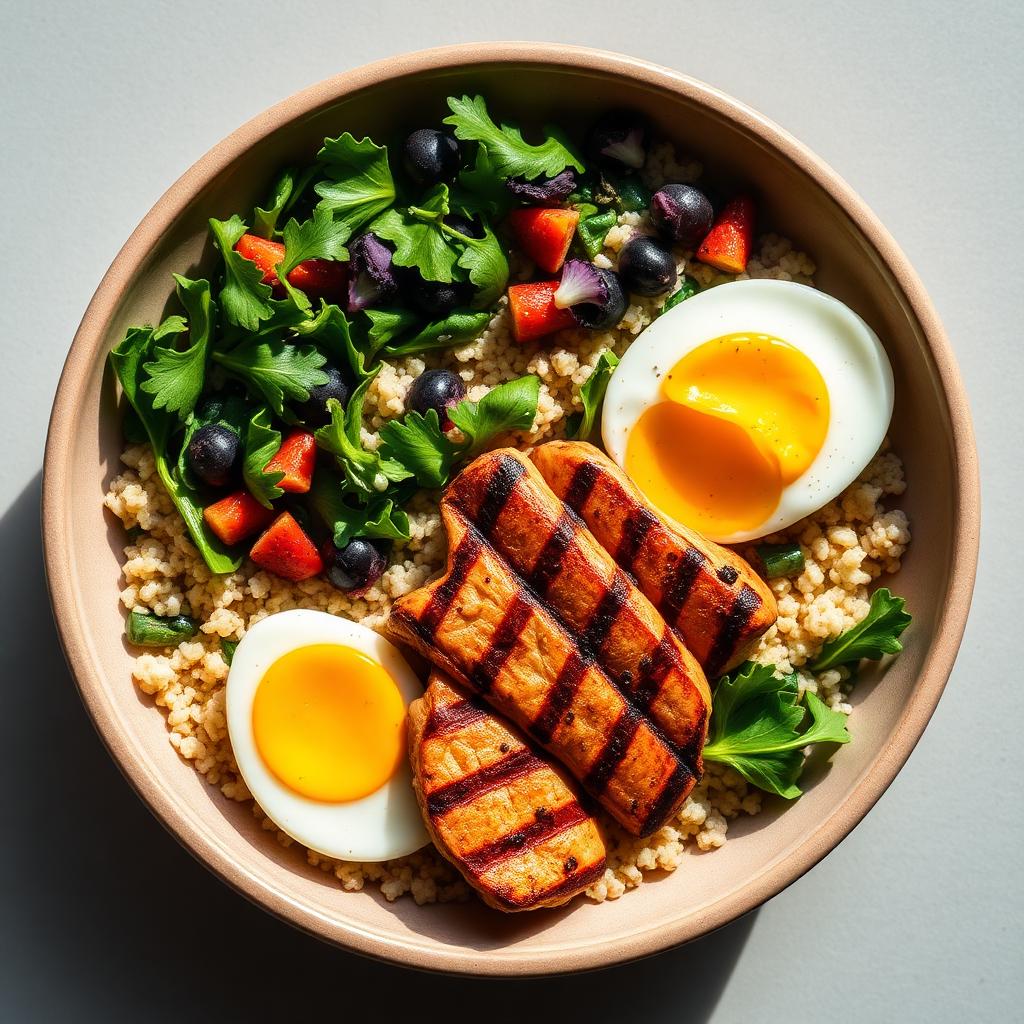
Oats cooked in stock, stirred with grated cheese, topped with two poached eggs. ~30g, plus a side of yoghurt makes 45g. Lunch Chicken and quinoa bowl. 150g grilled chicken, one cup quinoa, roasted vegetables, tahini. ~55g. Tuna and white bean salad. Two tins of tuna, cannellini beans, red onion, lemon, olive oil, parsley. ~50g and no cooking at all. Turkey and hummus wrap. High-protein tortilla, 120g sliced turkey, hummus, salad. ~45g.
Lentil and feta salad. Two cups cooked lentils, 60g feta, cucumber, tomato, herbs. ~40g, vegetarian. Dinner Salmon with lentils. 150g salmon on a bed of green lentils with mustard dressing. ~52g and heavy on omega-3s. Beef and black bean chilli. 150g lean beef plus a cup of beans per serving. ~45g and it batch-cooks. Chicken thigh traybake with chickpeas. Two thighs, a tin of chickpeas, peppers, paprika, roasted at 200°C for 35 minutes. ~48g, one tray.
Tofu and edamame stir-fry. 200g firm tofu, a cup of edamame, soy-ginger sauce, rice. ~42g, fully plant-based. Prawn and egg fried rice. 200g prawns, two eggs, day-old rice, peas. ~45g in 12 minutes. Four Rules That Make High-Protein Eating Sustainable Anchor every meal with a protein first. Decide the protein, then build carbohydrates and vegetables around it. Reversing that order is how meals end up at 15g.
Stack sources. Chicken plus beans, yoghurt plus whey, eggs plus cheese. Two sources is the fastest route past 40g. Batch the boring part. Cook 1kg of chicken, a pot of lentils and a tray of roast vegetables on Sunday. Assembly during the week takes four minutes. Keep emergency protein in the cupboard. Tinned tuna, tinned beans, eggs, protein powder, frozen prawns. These turn a 6g snack into a 30g meal.
Cooking Protein Without Ruining It Chicken breast: brine 20 minutes in salted water, sear hot, finish at 74°C internal. Rest five minutes. Salmon: skin-side down in a cold pan, heat gradually, flip for the last minute. Target 50–52°C for moist flesh. Tofu: press 15 minutes, toss in cornflour, then fry. Without pressing it steams and stays soggy. Lean beef: do not cook it past medium. Lean and well-done is sawdust.
Plant-Based? It Still Works Hitting 40g per meal on plants requires stacking more aggressively: lentils plus tofu, seitan plus beans, soy yoghurt plus a pea-protein scoop. Combine legumes with grains across the day and the amino acid profile takes care of itself — the old "complete protein at every meal" rule was retired decades ago. Build the Meal Around What You Have The best high-protein meal is the one you will actually cook tonight with what is in the fridge.
Enter your protein and whatever else you have into Reciply, set a protein target and time limit, and it will generate the full recipe with a macro breakdown and an A–F health grade so you can see exactly where you land. What does Reciply cost? Reciply is free to use . Every account starts with 3 free recipes — no credit card needed — including Quick Cook, SmartCook, Fridge Scan, recipe photos, nutrition and A–F health grades.
Saving, sharing and browsing community recipes stay free. If you cook often, Reciply Plus is an optional subscription for $1.99/week or $19.99/year . Both plans include 20 new recipes every week plus every kitchen tool. You can cancel any time. See Reciply pricing for details. Use it on the web at reciply.us or download the free iOS app: Reciply — Recipe Generator on the App Store . Note: Reciply is an AI recipe generator that writes original recipes from the ingredients you have.
It is not a recipe-saving, bookmarking, or cookbook-importing app, and it is not related to any similarly named recipe-organizing app. Kitchen tools you can use in Reciply All of these are live in the app today. SmartCook — type in what is already in your fridge and get a recipe built around it. Free. Recipe Generator — pick meal type, cook time, difficulty and dietary goal. Free. Fridge Scan — photograph your fridge and get five meal ideas from what it sees.
Free. Recipe Gallery — browse, rate and comment on community recipes. Free. Recipe Remix — change one thing about a recipe and regenerate it, image included. Plus. Cook Mode — step-by-step cooking with built-in timers and a screen that stays awake. Plus. Meal Planner — build a multi-day plan around your calorie and dietary targets. Plus. Shopping Lists — turn any recipe or meal plan into a checkable list with duplicates merged.
Plus. Diet Coach — log calories and macros and get told what to cook next. Plus. Offline Recipes — download your cookbook so it works with no connection. Plus. Sources USDA FoodData Central — reference nutrient data used to sanity-check the calories and macros shown on Reciply recipes. FoodSafety.gov — Safe Minimum Internal Temperatures — the cooking temperatures referenced for meat, poultry, fish and eggs.
Dietary Guidelines for Americans — the general nutrition guidance behind our A–F health grading. USDA FSIS — Leftovers and Food Safety — storage and reheating guidance for leftovers. Nutrition figures and health grades on Reciply are estimates cross-checked against public databases, not lab measurements, and are not medical advice. See how Reciply works .
Home · Blog · What is Reciply
Try Reciply free and generate recipes from your ingredients. It is an AI recipe generator that writes original recipes from your ingredients — not a recipe-saving or cookbook-importing app. Free iOS app: Reciply on the App Store.