Opening Reciply
Your kitchen is almost ready.
Opening Reciply
Your kitchen is almost ready.
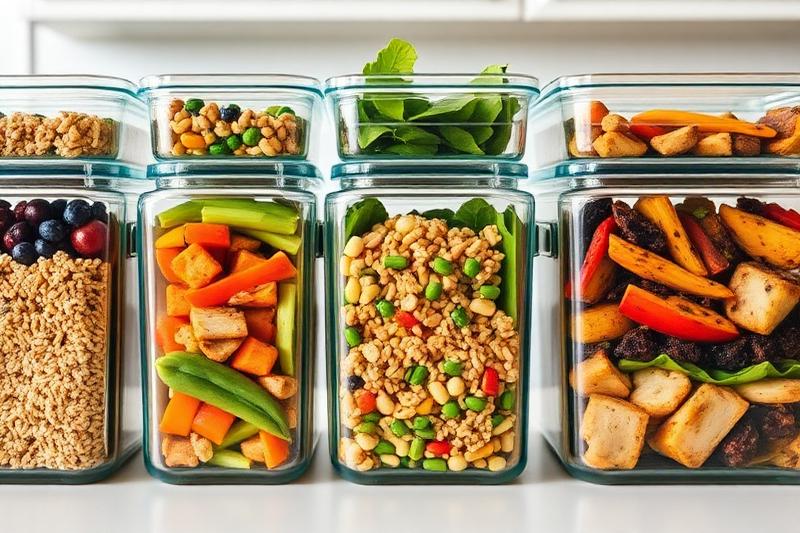
Meal Prep: The Habit That Changes Everything If you've ever found yourself ordering takeout on a Wednesday night because you were too tired to cook, meal prepping is the solution. The concept is simple: spend 2-3 hours on one day (usually Sunday) preparing meals for the entire week ahead. When dinner time arrives on a busy Tuesday, you simply reheat a pre-made meal instead of starting from scratch or reaching for the delivery app.
But if meal prep is so logical, why don't more people do it? Because most meal prep guides are written by fitness influencers who prep 47 containers of chicken and rice, making the whole process seem boring, overwhelming, and unrealistic for normal people. This guide is different. We'll focus on practical, flexible meal prep that works for real life — including families, picky eaters, and people who get bored eating the same thing twice.
The Three Approaches to Meal Prep Not everyone preps the same way. Choose the approach that fits your lifestyle: 1. Full Meal Prep (Cook Everything in Advance) Cook complete meals on Sunday and portion them into containers. Throughout the week, you just grab a container and reheat. This is the most hands-off approach during the week, but requires the most upfront time (2-3 hours). Best for: People with predictable schedules who don't mind eating pre-made meals, office workers who need grab-and-go lunches. 2.
Ingredient Prep (Prep Components, Assemble Later) Instead of cooking full meals, prep individual components: cook a big batch of rice, roast a tray of vegetables, grill several chicken breasts, wash and chop salad ingredients. During the week, you mix and match these components into different meals. Best for: People who get bored with repetitive meals, families with varying preferences, anyone who enjoys some cooking but wants to reduce weeknight effort. 3.
Freezer Prep (Cook and Freeze for Later) Cook meals in large batches and freeze them in portions. Unlike regular meal prep, these meals last for months, not days. Build up a freezer stash over several weekends, and you'll have a personal frozen food aisle of homemade meals. Best for: People with unpredictable schedules, anyone who wants emergency meals on hand, families who want variety over several weeks.
Your First Meal Prep: A Step-by-Step Plan Don't try to prep an entire week's worth of elaborate meals on your first attempt. Start small and build the habit gradually: Step 1: Choose 3 Recipes Pick one protein-heavy dish, one grain/starch-based dish, and one soup or stew. For example: baked chicken thighs with herbs, a big pot of rice, and a vegetable soup. This gives you enough variety for the week without overwhelming you on prep day.
Step 2: Make Your Shopping List Write down every ingredient you need for all three recipes in one list. Check your pantry first — you probably already have basics like oil, salt, garlic, and spices. Shop once, prep once. No mid-week grocery runs. Step 3: Prep in Parallel This is the key to efficient meal prep. While the chicken roasts in the oven (45 minutes, no attention needed), cook the rice on the stovetop and make the soup in a large pot.
All three happen simultaneously, so your total time is roughly 1.5 hours — not 4.5 hours of sequential cooking. Step 4: Cool and Store Properly Let everything cool to room temperature before putting it in containers (hot food in sealed containers creates condensation and makes food soggy). Store in airtight containers. Most meal-prepped food stays good in the fridge for 4-5 days. If you won't eat it by Thursday, freeze it.
Meal Prep Recipes That Reheat Well Not all foods are created equal when it comes to reheating. These categories work excellently: Soups and stews: Often taste BETTER after a day or two as flavors meld Rice and grain bowls: Reheat well with a splash of water to restore moisture Roasted chicken: Stays moist when stored with skin on and reheated gently Casseroles: Designed to be made ahead and reheated Chili and curries: Improve with time as spices develop Foods that DON'T reheat well: salads (prep ingredients separately), crispy/fried foods (get soggy), delicate fish (overcooks easily), and pasta with cream sauces (can separate).
Common Meal Prep Mistakes Prepping too much: Start with 3 recipes, not 7. You'll learn your rhythm over time. No variety: If you eat the same chicken and rice five days in a row, you'll burn out and quit. Prep different proteins, sauces, and vegetables. Ignoring storage: Invest in good containers with tight-fitting lids. Glass containers reheat better than plastic and don't absorb smells. Skipping seasoning: Meal-prepped food needs slightly more seasoning than fresh-cooked food, because flavors can dull after refrigeration.
Season generously. Using AI for Meal Prep Planning One of the most time-consuming parts of meal prep is deciding what to make. Reciply can help: generate multiple recipes for the week, each with nutritional information and cooking times. Use the meal planner feature to organize your week, see your daily nutritional intake at a glance, and create a shopping list from your planned recipes. It takes the decision fatigue out of meal prep and lets you focus on the actual cooking.
What does Reciply cost? Reciply is free to use . Every account starts with 3 free recipes — no credit card needed — including Quick Cook, SmartCook, Fridge Scan, recipe photos, nutrition and A–F health grades. Saving, sharing and browsing community recipes stay free. If you cook often, Reciply Plus is an optional subscription for $1.99/week or $19.99/year . Both plans include 20 new recipes every week plus every kitchen tool.
You can cancel any time. See Reciply pricing for details. Use it on the web at reciply.us or download the free iOS app: Reciply — Recipe Generator on the App Store . Note: Reciply is an AI recipe generator that writes original recipes from the ingredients you have. It is not a recipe-saving, bookmarking, or cookbook-importing app, and it is not related to any similarly named recipe-organizing app.
Kitchen tools you can use in Reciply All of these are live in the app today. SmartCook — type in what is already in your fridge and get a recipe built around it. Free. Recipe Generator — pick meal type, cook time, difficulty and dietary goal. Free. Fridge Scan — photograph your fridge and get five meal ideas from what it sees. Free. Recipe Gallery — browse, rate and comment on community recipes.
Free. Recipe Remix — change one thing about a recipe and regenerate it, image included. Plus. Cook Mode — step-by-step cooking with built-in timers and a screen that stays awake. Plus. Meal Planner — build a multi-day plan around your calorie and dietary targets. Plus. Shopping Lists — turn any recipe or meal plan into a checkable list with duplicates merged. Plus. Diet Coach — log calories and macros and get told what to cook next.
Plus. Offline Recipes — download your cookbook so it works with no connection. Plus. Sources USDA FoodData Central — reference nutrient data used to sanity-check the calories and macros shown on Reciply recipes. FoodSafety.gov — Safe Minimum Internal Temperatures — the cooking temperatures referenced for meat, poultry, fish and eggs. Dietary Guidelines for Americans — the general nutrition guidance behind our A–F health grading.
USDA FSIS — Leftovers and Food Safety — storage and reheating guidance for leftovers. Nutrition figures and health grades on Reciply are estimates cross-checked against public databases, not lab measurements, and are not medical advice. See how Reciply works .
Home · Blog · What is Reciply
Try Reciply free and generate recipes from your ingredients. It is an AI recipe generator that writes original recipes from your ingredients — not a recipe-saving or cookbook-importing app. Free iOS app: Reciply on the App Store.