
Opening Reciply
Your kitchen is almost ready.
Opening Reciply
Your kitchen is almost ready.
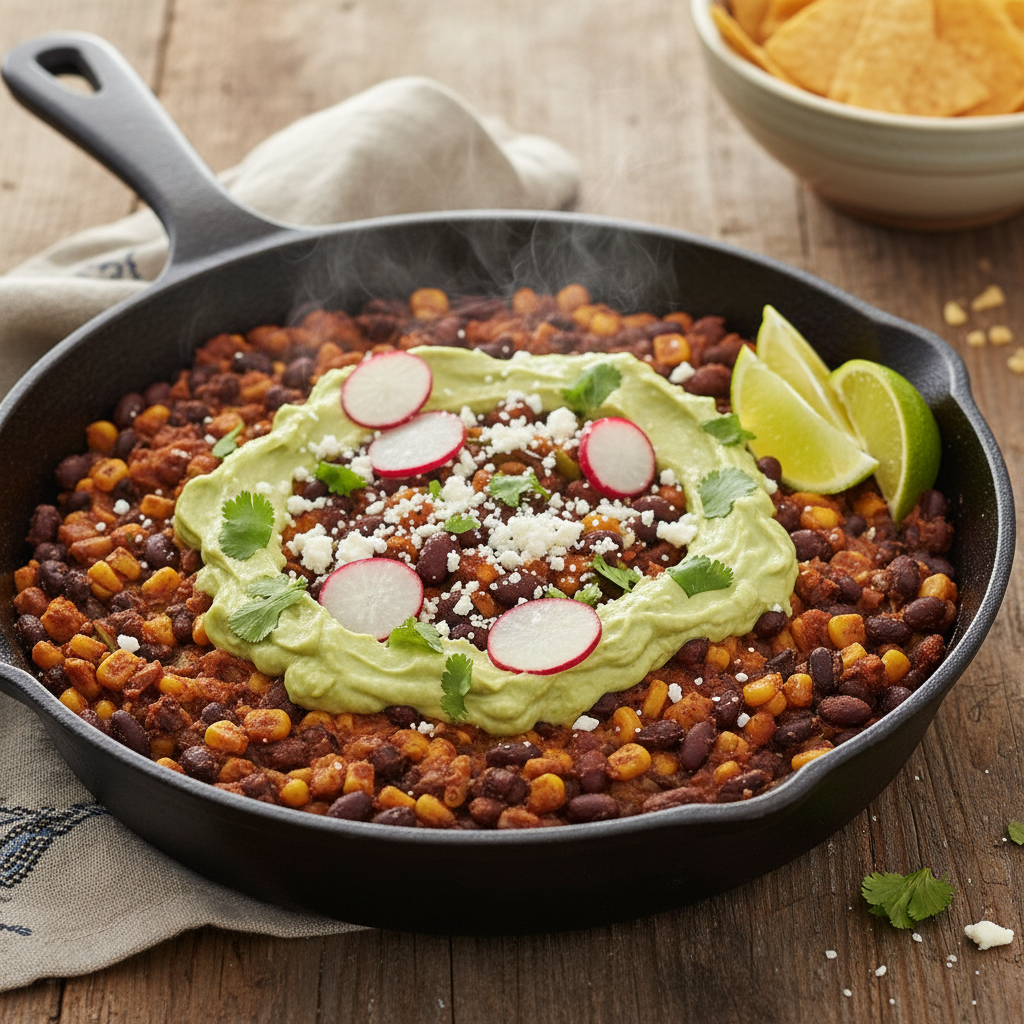
Cheap cooking advice usually stops at “buy dried beans.” That is true and it is not a plan. What actually keeps a grocery bill down week after week is a small set of structural decisions made before you shop, not willpower in the aisle. Here is the method we use, written the way we would explain it to a friend. Step 1: Pick one cheap protein and one flexible one Rotating a single inexpensive protein through the week is the largest single lever.
Whole chicken, chicken thighs, ground meat, eggs, canned fish, dried or canned beans and tofu are all in the cheap tier almost everywhere in the US. A whole chicken is the classic example because it is really three purchases: meat for two dinners, a carcass for stock, and fat for cooking the vegetables. Roast it Sunday, shred what is left Monday, simmer the bones Tuesday. Step 2: Repeat ingredients on purpose Waste is what makes budget cooking fail, and waste comes from buying one ingredient for one recipe.
If cabbage appears in three dinners the whole cabbage gets eaten. If it appears in one, half of it goes in the bin on Sunday. Plan across recipes, not recipe by recipe. Cabbage becomes slaw, then a stir fry, then a braise. A bunch of cilantro becomes a sauce, then a garnish, and the stems go in the stock bag. Step 3: Make the starch do the work Rice, pasta, potatoes, tortillas, bread, oats and polenta are the cheapest calories in the store and they carry flavor from everything else.
A dinner that is mostly starch with a strong sauce and a moderate amount of protein reads as generous; the same protein spread thin across a plate of salad reads as mean. This is also where much of the world’s best home cooking already lives — congee, pasta e fagioli, dal and rice, bean tacos, shakshuka with bread. None of those are compromises. Step 4: Spend on the flavor, not the protein The counterintuitive part.
A tin of anchovies, a good chili crisp, real parmesan, decent olive oil and whole spices cost more per pound than almost anything else on the list, and each lasts weeks. They are what makes cheap ingredients taste deliberate. Cutting the cost of your seasoning is where budget cooking starts to feel like deprivation. A sample week Sunday — roast whole chicken with potatoes and onions. Stock goes on after dinner.
Monday — chicken and cabbage fried rice with the leftover meat and yesterday’s rice. Tuesday — lentil soup using the stock, plus bread. See lentil and vegetable ideas . Wednesday — bean and cheese quesadillas with a quick cabbage slaw. Thursday — pasta with garlic, olive oil, chili and whatever green is left. Friday — egg and potato hash, everything left in the crisper drawer.
Saturday — deliberately unplanned. Notice how few distinct ingredients that is: chicken, potatoes, onions, rice, cabbage, lentils, bread, beans, tortillas, cheese, pasta, eggs. Twelve items, seven dinners, and each one shows up at least twice. Shopping rules that hold up Check the unit price, not the shelf price. The larger package is usually but not always cheaper per ounce. Frozen vegetables beat fresh on price and on waste, and nutritionally they are close, because they are frozen at peak.
Buy whole and break it down. Whole chicken over parts, block cheese over shredded, whole spices over ground. Store brands for staples , name brands only where you can taste the difference. Shop the reduced rack first and plan around what is there. Using a generator without blowing the budget Most recipe sites sell you a shopping list. An ingredient-first tool does the opposite. When we tightened Reciply’s generator, one specific rule we added was that it may only add basic pantry staples — salt, oil, sugar, common spices — rather than sending you out for four new items.
Type your list into SmartCook and you get a dish that uses it, not one that needs a trip. For a full week, the Meal Planner builds the plan and Shopping Lists merges duplicate ingredients across recipes, which is exactly where hand-written lists leak money. What does Reciply cost? Reciply is free to use . Every account starts with 3 free recipes — no credit card needed — including Quick Cook, SmartCook, Fridge Scan, recipe photos, nutrition and A–F health grades.
Saving, sharing and browsing community recipes stay free. If you cook often, Reciply Plus is an optional subscription for $1.99/week or $19.99/year . Both plans include 20 new recipes every week plus every kitchen tool. You can cancel any time. See Reciply pricing for details. Use it on the web at reciply.us or download the free iOS app: Reciply — Recipe Generator on the App Store . Note: Reciply is an AI recipe generator that writes original recipes from the ingredients you have.
It is not a recipe-saving, bookmarking, or cookbook-importing app, and it is not related to any similarly named recipe-organizing app. Kitchen tools you can use in Reciply All of these are live in the app today. SmartCook — type in what is already in your fridge and get a recipe built around it. Free. Recipe Generator — pick meal type, cook time, difficulty and dietary goal. Free. Fridge Scan — photograph your fridge and get five meal ideas from what it sees.
Free. Recipe Gallery — browse, rate and comment on community recipes. Free. Recipe Remix — change one thing about a recipe and regenerate it, image included. Plus. Cook Mode — step-by-step cooking with built-in timers and a screen that stays awake. Plus. Meal Planner — build a multi-day plan around your calorie and dietary targets. Plus. Shopping Lists — turn any recipe or meal plan into a checkable list with duplicates merged.
Plus. Diet Coach — log calories and macros and get told what to cook next. Plus. Offline Recipes — download your cookbook so it works with no connection. Plus. Sources USDA FoodData Central — reference nutrient data used to sanity-check the calories and macros shown on Reciply recipes. FoodSafety.gov — Safe Minimum Internal Temperatures — the cooking temperatures referenced for meat, poultry, fish and eggs.
Dietary Guidelines for Americans — the general nutrition guidance behind our A–F health grading. USDA FSIS — Leftovers and Food Safety — storage and reheating guidance for leftovers. Nutrition figures and health grades on Reciply are estimates cross-checked against public databases, not lab measurements, and are not medical advice. See how Reciply works .
Home · Blog · What is Reciply
Try Reciply free and generate recipes from your ingredients. It is an AI recipe generator that writes original recipes from your ingredients — not a recipe-saving or cookbook-importing app. Free iOS app: Reciply on the App Store.